
Berkeley · Sauna Builder Services
Cold Plunge Install
Cold plunge tubs set on a level base with a properly sized chiller, filtration, GFCI-protected power and drainage, placed beside your sauna or on their own in a Berkeley yard or garage.
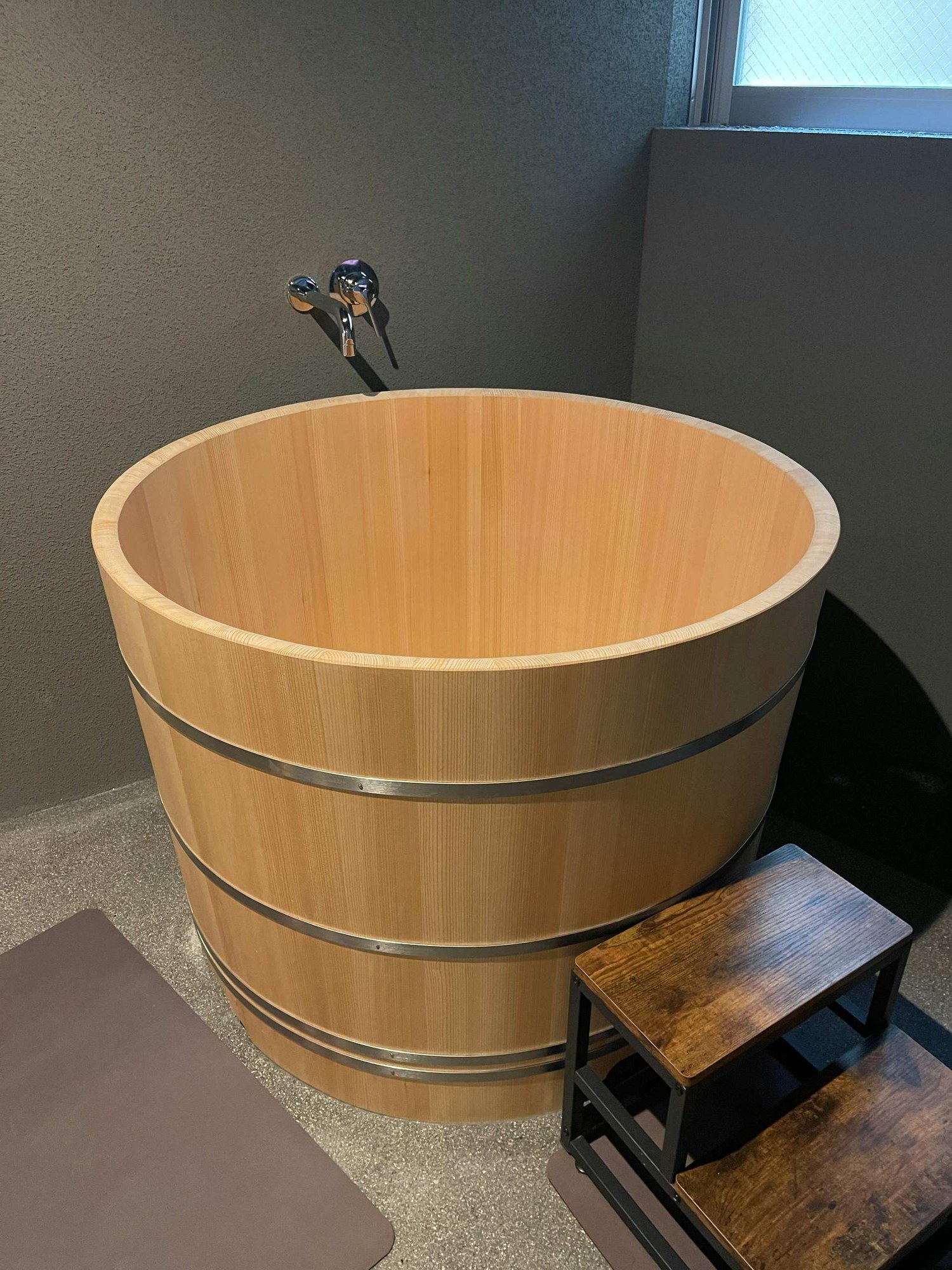
Holding water at forty-five degrees
A cold plunge is a tub of water plus a refrigeration unit that works against the weather all year. Berkeley helps a little, since summers are mild and the fog keeps afternoons cool. It also works against you, because a chiller parked in a damp side yard corrodes faster than one in a dry garage. We install packaged tubs from brands such as BlueCube and Plunge, stand-alone chillers from Penguin Chillers, and custom plunges built from cedar or stainless steel.
The job has more pieces than the product photos let on. The chiller needs airflow and a circuit of its own. The tub needs a base that can carry the weight. The water needs filtration and a sanitizer or it goes cloudy inside a week. Then there is the drain. We take care of each piece and leave you with water that is cold on demand and clean enough to dunk your head in.
Hot and cold rounds are why most people buy one, so the plunge usually lands near a sauna. Some clients add it next to an existing cabin, and some plan it with new barrel saunas so the deck, lights and trench happen once. Gyms and studios that want a row of plunges should read about our commercial saunas, because shared water brings its own rules.
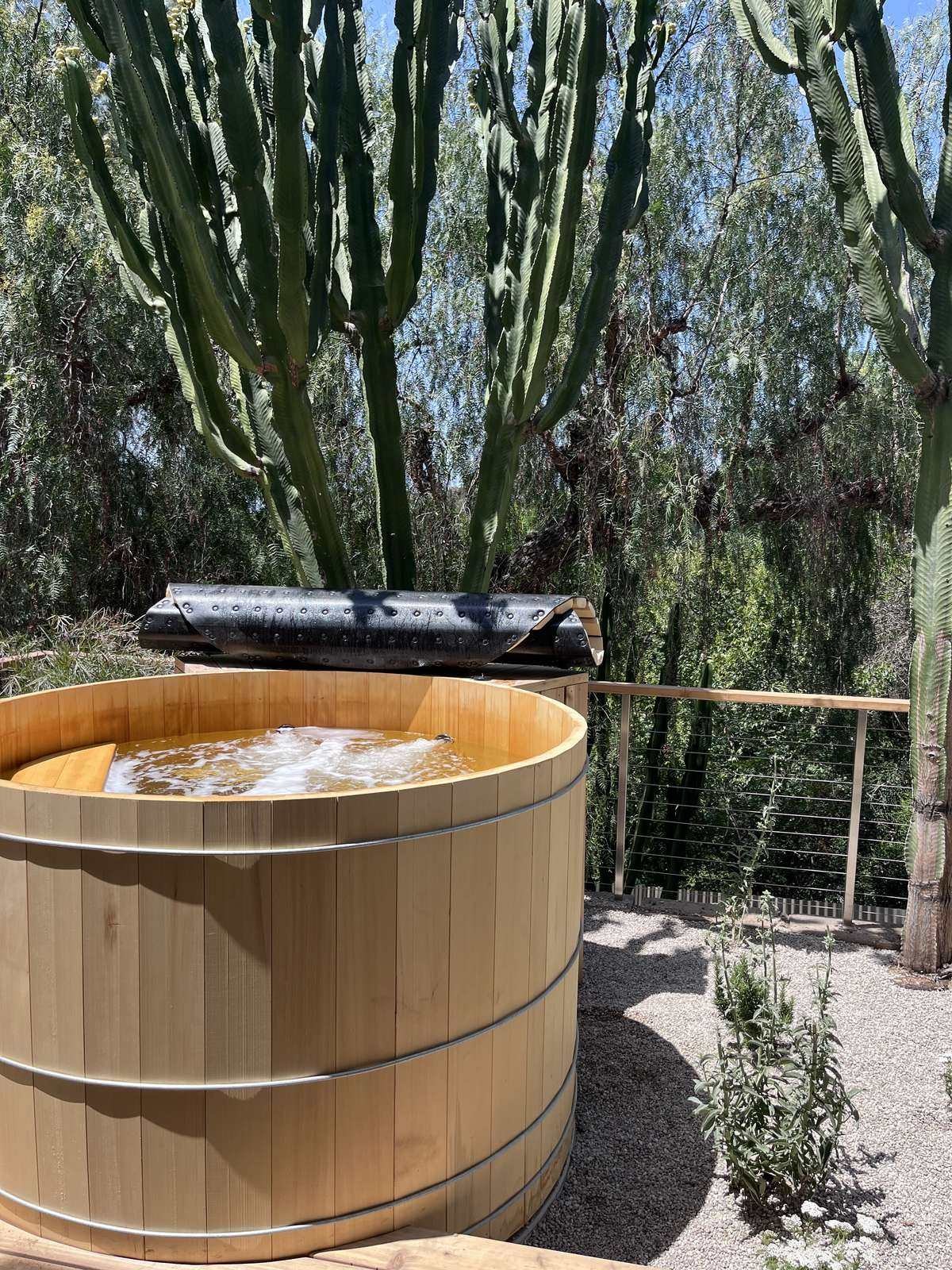
Sizing the chiller so it keeps up
Chillers are rated in horsepower and BTUs, and an undersized unit runs all day and still misses its setpoint on a warm October afternoon. We size the chiller to your tub volume, its location and how cold you like it, then wire it on its own protected circuit. When the plunge is part of a bigger project, it becomes one line inside our full list of sauna installation services, with one schedule and one crew.
- We match chiller capacity to tub volume, target temperature and sun exposure.
- We place the chiller where it gets air and stays out of the rain.
- We run a dedicated GFCI circuit, which code requires near water.
- We set up filtration and a sanitizing method that suits how often you plunge.
- We confirm the base can hold a filled tub, including older decks and garage slabs.
- We plan a drain route the city will accept.
Signs a plunge belongs in your routine
Cold water is an acquired taste. These are the situations where people here decide it deserves a permanent spot.
You already use a sauna often
Alternating heat and cold is the old sauna rhythm. A plunge a few steps from the sauna door replaces the lukewarm garden hose and makes each round feel finished.
You are tired of hauling ice
A chest freezer conversion or a stock tank full of ice bags works for about a month. A chilled tub holds temperature with no store runs, and its power bill is well below what daily ice costs.
Training and recovery
Trail runners up in Tilden, climbers from the gyms along Gilman and cyclists who grind up Grizzly Peak often want cold water after a hard day. A plunge at home fits around those sessions with no drive to a club.
You want a number you can repeat
A chiller holds whatever setpoint you choose, often somewhere from 39 to 55 degrees. That makes sessions easier to track and easier to keep within safe limits.
There is one good spot left
A plunge takes less room than a spa. A side yard or a corner of a converted garage usually does it, as long as power and a drain are close by.
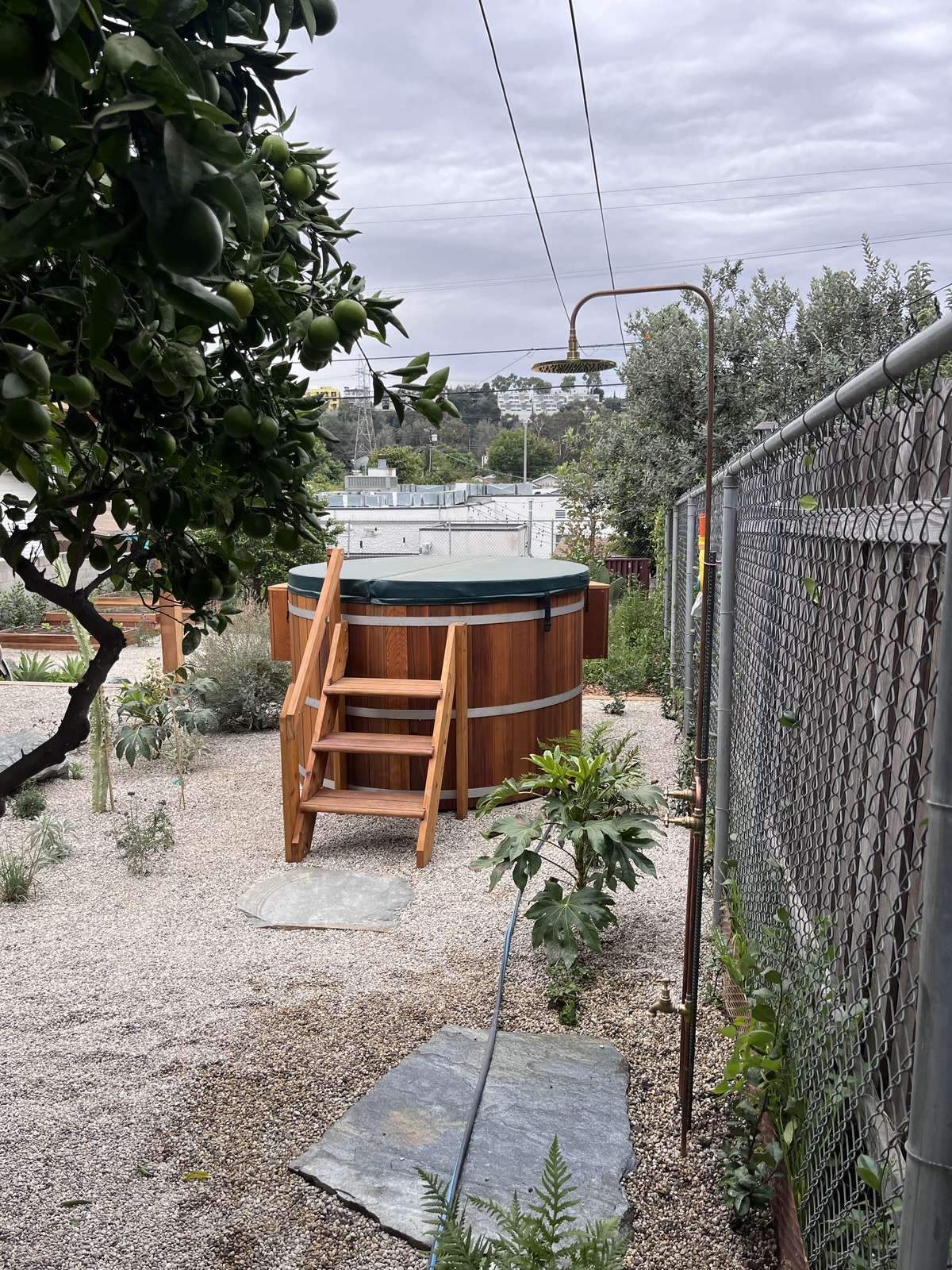
How we put a cold plunge in
Pick the spot
We weigh shade, drainage, noise toward the neighbors and the distance to your panel. Chillers make a steady hum, so we keep them away from shared fences where we can.
Size the equipment
We work out tub volume and heat gain, then choose a chiller with some headroom. On custom tubs we detail the insulation so the compressor cycles less.
Base, power and plumbing
Pad or deck prep, a dedicated GFCI circuit, and the piping between tub, filter and chiller. On all-electric homes we note the new load against the solar and battery plan.
Fill, chill and walk through
We fill the tub, pull it down to temperature, dose the sanitizer, and show you how to clean the filter and read the controller.
Chillers, filters and other plunge details
These are the components we talk through on almost every plunge job.
Chillers
Stand-alone units from Penguin Chillers and the built-in units on BlueCube tubs cover most homes. Some chillers also heat, which lets the same tub double as a warm soak in January.
Filtration
A cartridge filter catches hair and grit. Bigger systems add a UV lamp or ozone to cut chemical use. A tub two people use every morning needs more filtration than one used twice a week.
Tub materials
Stainless steel lasts and wipes clean. Insulated acrylic and rotomolded shells hold cold well and cost less. Cedar looks right next to a sauna but needs a liner or careful water care.
Covers and insulation
A snug insulated lid cuts chiller run time a lot. On custom tubs we add foam under and around the shell as well.
Steps, rails and lighting
A step and a grab rail help on a wet deck, and low lighting helps after dark. We place both so neither blocks a fast exit.
Distance from the sauna
Three or four paces from the sauna door is about right. Much farther and people start skipping the plunge on cold nights.
What a home plunge costs to set up
In Berkeley a packaged plunge on an easy site, with a new circuit and basic setup, usually starts near six thousand dollars. Custom cedar or stainless tubs with separate chillers and deck work tend to run twelve to thirty thousand. Cost follows:
- Tub type, from a packaged unit to a custom stainless or cedar build.
- Chiller size, and whether it also heats.
- Electrical distance and any panel changes.
- Filtration and sanitation equipment.
- Base or deck work and the drain route.
We price after a site visit and put the figures in writing. If the plunge sits inside a larger plan with a sauna built to your own layout, look at custom saunas so the two get designed side by side.
Frequently Asked Questions
What should I look for when purchasing a backyard cold plunge?
Compare the chiller capacity to the tub volume and the temperature you want. Look for real filtration and a clear sanitizing plan, an insulated shell, a lid that seals, and a chiller rated for outdoor use if it will live outside. Ask who does warranty service in the Bay Area, and check that the electrical draw matches what your panel can spare.
How cold should a plunge be?
Our clients mostly land somewhere in the high forties or low fifties. Colder is fine for experienced users who keep sessions short. Anyone with a heart condition or blood pressure concerns should talk with a doctor first.
How often should I drain and refill it?
With good filtration and a sanitizer, every one to three months for a household plunge. Without a filter, expect to drain it about once a week.
Can a cold plunge go in a garage?
Yes, and garages often suit them, since the chiller stays dry and out of the sun. Plan for a floor drain or pump-out, some airflow for the warm air the chiller throws off, and a floor finish that shrugs off splashes.
Does a plunge need a permit in Berkeley?
A new electrical circuit usually does. A plug-in tub on an existing GFCI outlet may not. Built-in plunges tied to plumbing or inside a new structure need more paperwork. We check your situation and handle the filing.
See all FAQs on our FAQ page.
Planning cold plunge install in Berkeley?
Send a few details or give us a call, and we will set up a visit and a free written estimate. We look at the room or yard, the panel and the access, then tell you what will work and what it will cost, with no obligation.
Or call us now: 510-953-5839