
Berkeley · Sauna Builder Services
Outdoor Saunas
Freestanding cabin and barrel saunas for Berkeley yards, set on proper footings with a trenched circuit, fire-zone detailing on hillside lots, and siding and roofing chosen to shrug off fog and winter rain.
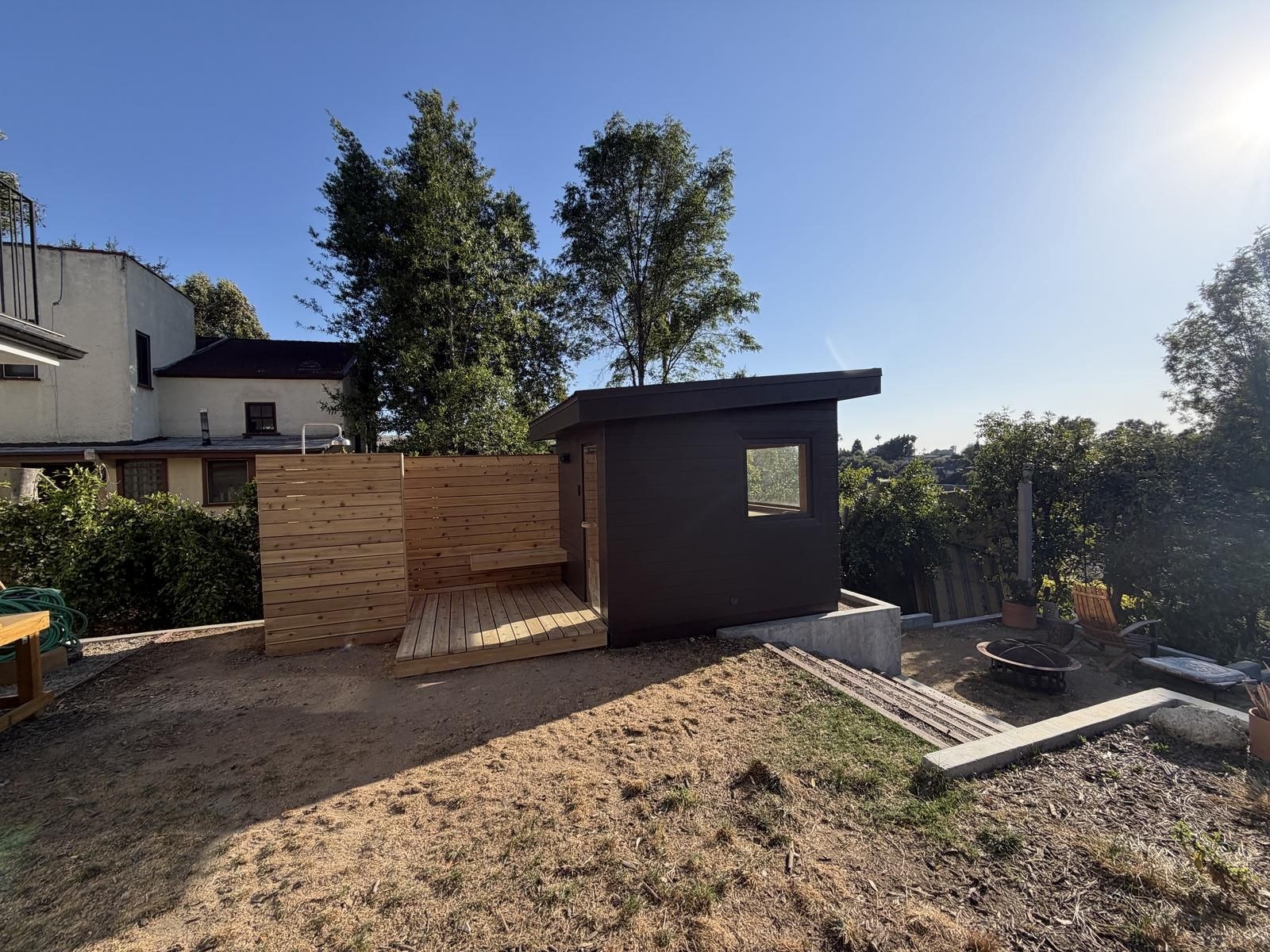
Putting a hot room in the backyard
An outdoor sauna is a small building, and in Berkeley it gets treated like one. It needs a footing, a roof that sheds a February storm, siding that can sit in summer fog for weeks without growing moss, and a power feed that got there legally. We build cabin saunas, barrel saunas and custom outbuildings, with electric sauna heaters in most of them and wood-fired stoves where the lot and the fire rules allow it. Inside, the room is a proper dry sauna with the same insulation, venting and bench work we would put in a house.
Berkeley yards are rarely simple. A flat lot in Westbrae might have a clay layer that holds water all winter. A Cragmont lot might drop twelve feet between the back door and the fence. A Craftsman in the flats might have a detached garage that is closer to a finished sauna than anything you could buy in a box. We look at the ground, the setbacks and the route from your panel before anybody picks a model, because those three things move the price more than the cabin does.
Plenty of owners pair the sauna with water. A cedar tub install beside the cabin gives you a warm soak between rounds, and a shared deck ties the two together. If the yard is odd enough that no catalog shape fits, custom sauna design puts the building on paper first so the permit set and the site plan match what actually gets built.
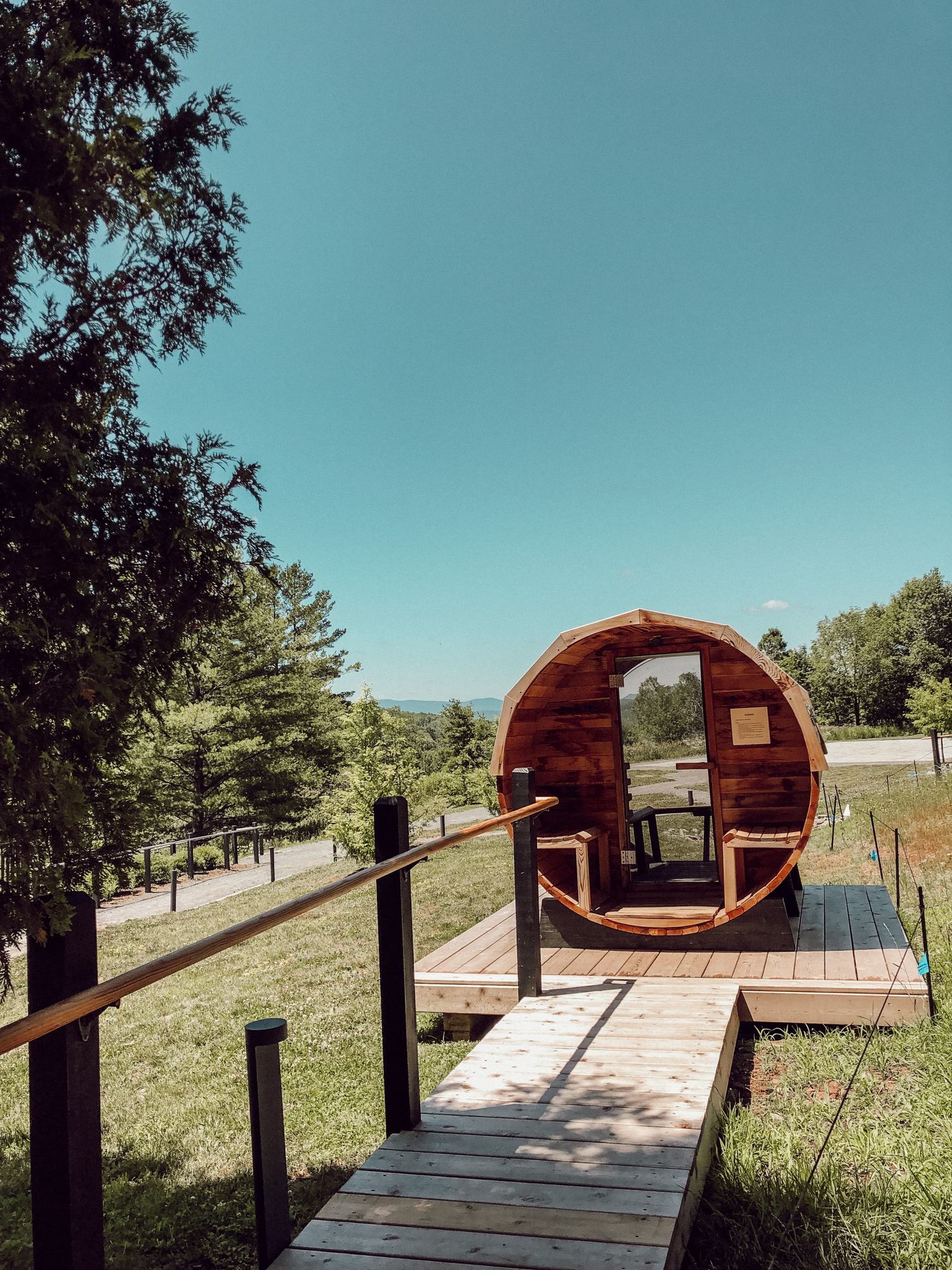
What we sort out before the cabin shows up
We hold a Class B license, so the footings, the trench, the electrical and the building all sit under one contract and one crew. When the City of Berkeley inspector walks the site, the person who set the piers is standing there to answer questions, which tends to make for a short visit. The rest of our work as an outdoor sauna builder in the East Bay is on the main page.
- We set footings for the soil we find, including the expansive clay that shows up all over the flats.
- We trench and conduit the 240V feed ourselves and plan the panel work around any solar and battery system.
- We detail hillside builds for the fire-zone rules, with ember-resistant vents, noncombustible roofing and clearances.
- We tie the structure down properly, since the Hayward Fault runs along the base of the hills.
- We choose roofing and exterior finishes that dry quickly after fog instead of staying damp for days.
- We handle setbacks, lot coverage and the permit set so the cabin stays a legal structure at resale.
Good reasons to build it outside
Moving the sauna out of the house solves a handful of problems we run into over and over in Berkeley homes.
There is no spare room inside
Brown-shingle houses and flatland bungalows were built tight. Giving up a bedroom or a bath for a hot room is a hard sell, and the space under the house is often a crawlspace with three feet of headroom. A yard cabin adds a room without taking one away.
You want a wood-fired stove
The crackle and soft heat of a wood stove is the whole appeal for some people. Indoors it means a listed chimney through the roof of an old house. Outdoors it is simpler, provided the lot sits outside the strictest fire-zone limits or the stove gets the spark arrestor and clearances the fire department asks for.
Your house already fights damp
Older homes near the bay pick up moisture every winter. Keeping the hot room and its humidity in a separate structure means one less load on the crawlspace vents and one less place for mildew to start.
The yard is getting redone anyway
If a landscaper is already regrading, pouring a patio or building a deck, a sauna pad and a conduit run cost far less added now than cut in two years later.
Part of the property is rented
Owners with an ADU or a tenant downstairs often want a sauna that belongs to the main household and shares no wall with anyone. A detached cabin keeps the heat, the noise and the late-night door away from the unit.
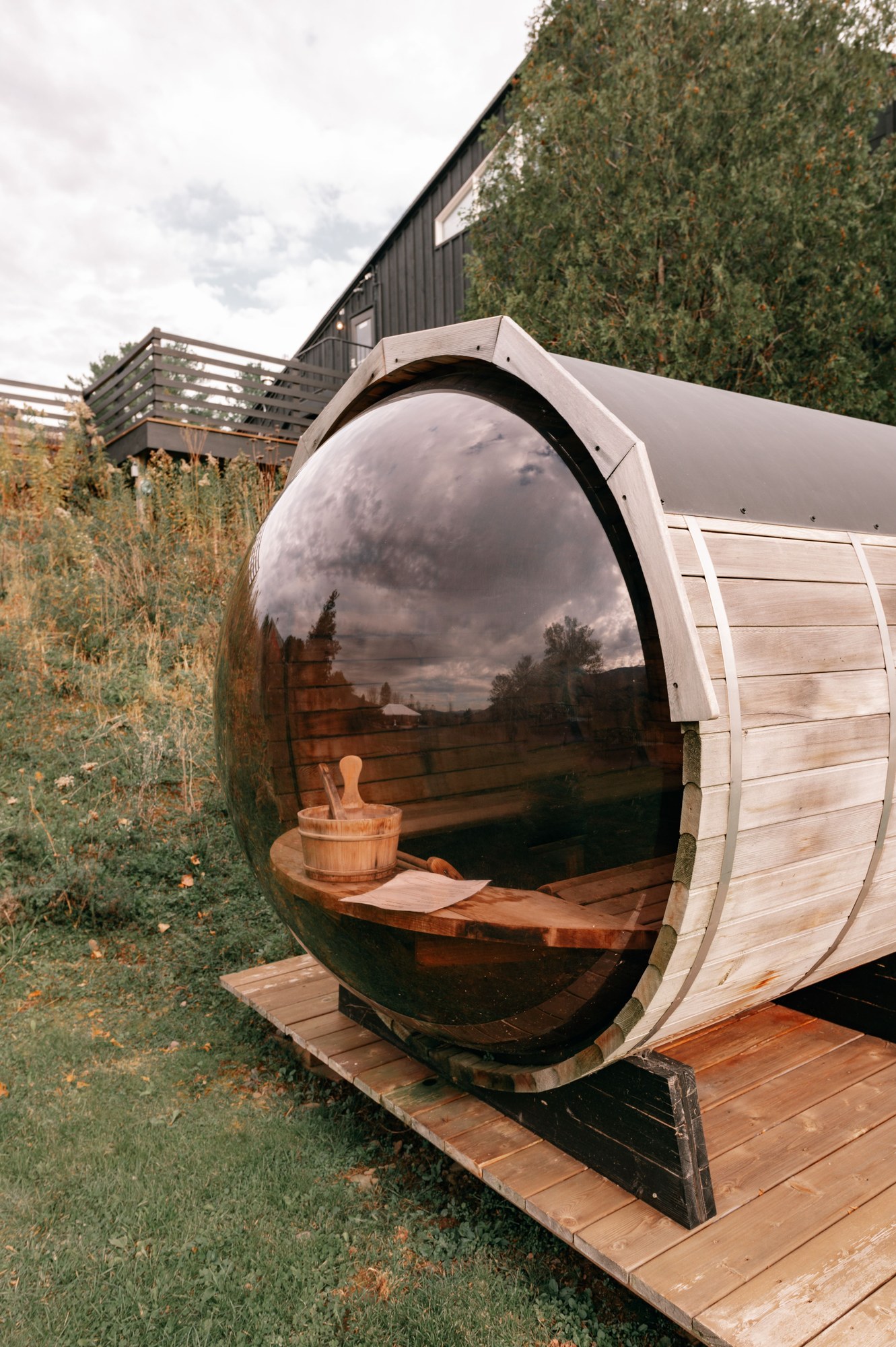
From bare dirt to the first session
Walk the lot
We look at slope, drainage, material access, distance to the panel and where the neighbors' windows face. Some hill lots are reached only by stairs, which changes how materials get in.
Plans and permit
We draw a site plan with setbacks plus the building itself, then file with the City of Berkeley Permit Service Center. Fire-zone lots can add a review step, and our schedule allows for it.
Groundwork and power
Pier footings, a compacted gravel pad or a small slab, depending on the soil. The circuit trench goes in during the same week, with conduit sized so a later tub heater or chiller can share the run.
Build, heat and hand over
The cabin goes up, the heater is set and wired, the inspector signs off, and we bring the room to temperature with you there. You keep the care sheet, a few spare stones and a two-minute lesson on the vents.
Parts of an outdoor build worth getting right
A backyard sauna lasts or fails on a few details people rarely ask about.
Wood species
Western red cedar is the local default for siding and interior because it copes with wet weather and smells good hot. A hemlock sauna interior or thermally modified spruce costs less and stays pale. We buy FSC-certified or reclaimed stock on request, and most Berkeley clients request it.
Floor and wall construction
A raised, ventilated floor keeps the frame off wet ground. Walls get mineral wool insulation, a foil vapor retarder on the warm side, and a rainscreen gap behind the siding so the cladding dries out between storms.
Ventilation
Fresh air enters low near the heater and leaves high on the far side. Exterior openings get ember-resistant mesh on fire-zone lots, which also keeps out the roof rats that love a warm wall cavity.
Doors and windows
Tempered glass doors with a magnetic or roller catch, never a lock. A small window toward the garden or the bay makes a tight cabin feel twice its size, and we bump the heater output to cover the extra heat loss.
Lighting and controls
Heat-rated LED strips under the benches, a path light to the door, and a control panel mounted just inside the house or on the porch. Wi-Fi controllers from Huum or Harvia let you start the room from the kitchen before you walk out.
Accessories
A cedar bucket and ladle, a thermometer and hygrometer, towel hooks outside the hot room, and an outdoor shower if a water line runs nearby.
Budgeting for a backyard sauna
Most outdoor saunas we build in Berkeley land somewhere between fourteen thousand dollars for a barrel on an easy flat lot and forty thousand or more for a framed cabin on a slope. The spread comes from:
- Foundation work, which ranges from a gravel pad to engineered piers on a hillside.
- Length of the electrical trench and any panel or battery integration.
- Building type, with kit barrels at the low end and framed custom cabins at the top.
- Heater choice, where a wood stove adds a flue kit and fire-zone details.
- Access, since carrying materials up long stairs adds labor days.
- Extras such as a deck, an outdoor shower or a covered changing porch.
We price the whole job in writing after the site visit, so footings and trenching are in the number from day one. If the classic Finnish ritual of ladling water over hot rocks is what you are after, our page on traditional saunas goes further into stones, steam and heater sizing.
Frequently Asked Questions
Can I have a sauna in my backyard?
On most Berkeley lots, yes. A detached sauna counts as an accessory structure, so it has to respect the setbacks, height limit and lot coverage for your zoning district. Very small structures can sometimes skip a building permit, but the new electrical feed almost always needs one. Hill properties in the fire zone get closer review of vents, roofing and any wood-burning stove.
What permits are required for constructing an outdoor sauna?
Plan on an electrical permit for the new circuit and, for most cabins, a building permit from the Permit Service Center. A wood-fired unit brings in fire review. We prepare and file the full set as part of the job.
How do I choose the right sauna for a small backyard?
Start with the footprint left after setbacks, then decide how many people will use it at once. A short barrel or a compact cabin with one bench tier fits plenty of flatland yards. Keep it close enough to the house that the trench stays short.
Will fog and winter rain damage an outdoor sauna?
A cabin built for local weather handles both well: cedar siding, a real roof with an overhang, a raised floor and a rainscreen gap. The damage we get called about comes from kits set straight on lawn or bare dirt, where the lowest boards stay wet and rot inside a few seasons.
Can an outdoor sauna run on solar?
It draws from your system like any other load. A 6 to 9kW heater pulls hard for the first half hour, so we look at the panel, the inverter and any battery before deciding how the sauna should be fed while it warms up.
See all FAQs on our FAQ page.
Planning outdoor saunas in Berkeley?
Send a few details or give us a call, and we will set up a visit and a free written estimate. We look at the room or yard, the panel and the access, then tell you what will work and what it will cost, with no obligation.
Or call us now: 510-953-5839